

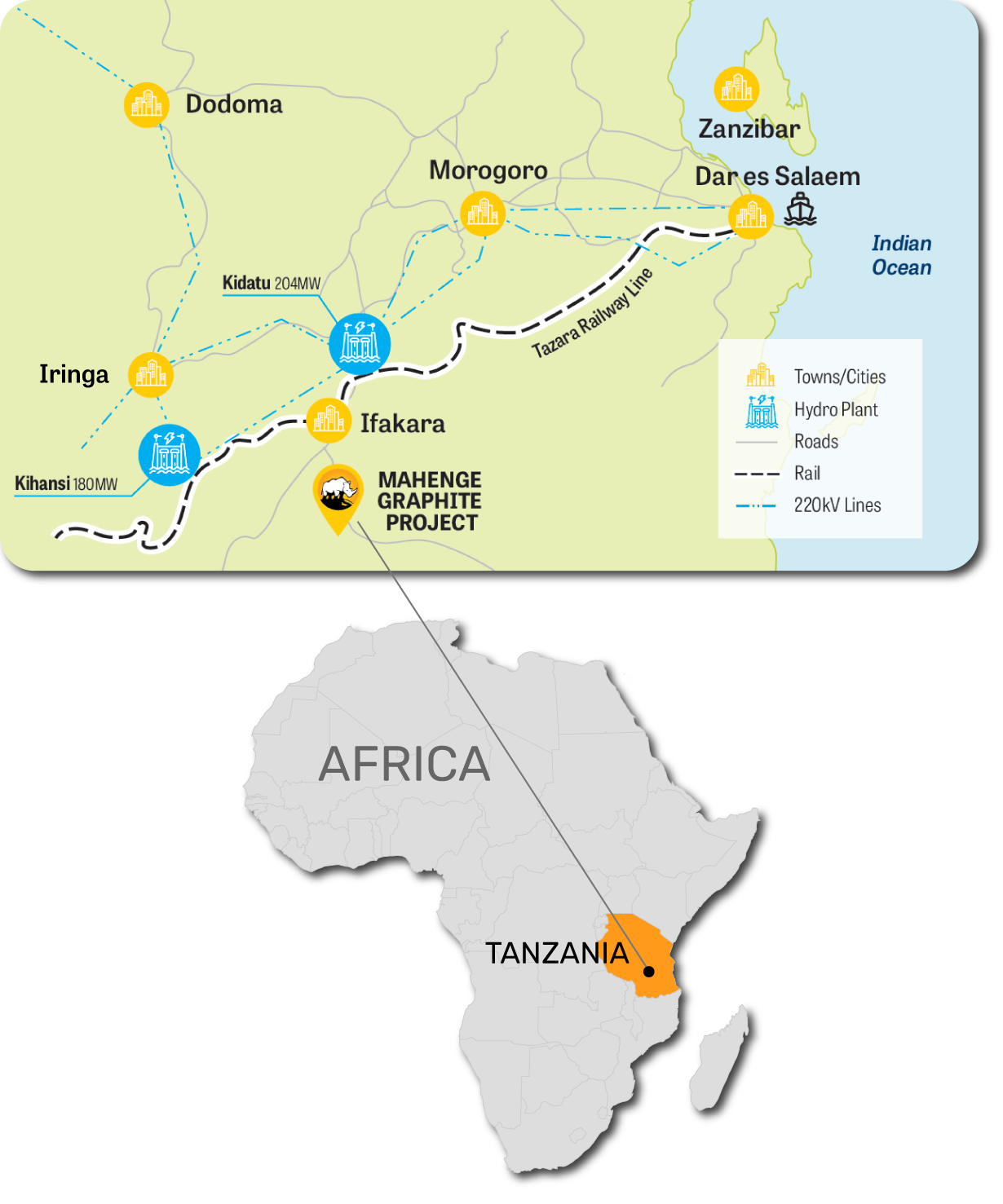
The Mahenge Graphite Project is located in south-eastern Tanzania, in the Ulanga District of the Morogoro Region, approximately 350 km southwest of Tanzania’s largest city Dar es Salaam and 70 km south of the town of Ifakara. The distance by road from Dar es Salaam to the site is approximately 482 km. The nearest town is the Mahenge township, located approximately 9 km from the site.
Mine Plan
- Open pit mine operation, process plant, and associated infrastructure.
- Develop over 4 stages (4 processing modules) to mine up to c.4Mtpa and produce up to 340ktpa of graphite concentrate.
- Five products will be produced each consisting of a different flake size distribution.
- Current mine life of 26 years based on 4 operating modules.
- Current focus is development of the first processing module (‘Module 1’).
Competitive Advantages
One of the key highlights of the enhanced DFS Update was industry analysis highlighting Mahenge Graphite Project’s potential 1st quartile position on the global costs curve – a potentially bold claim when one considers ~70% of the world’s natural graphite is mined in China.
While the Mahenge Graphite Project graphite deposit is Tier 1 scale and has a very low strip ratio of 0.77 life-of-mine, its key differentiating competitive advantages are access to competitively priced hydro-dominated grid power in Tanzania and a much higher percentage of higher value per tonne large flake products than most peers.
ESG footprint and focus on delivering a new greener source of graphite
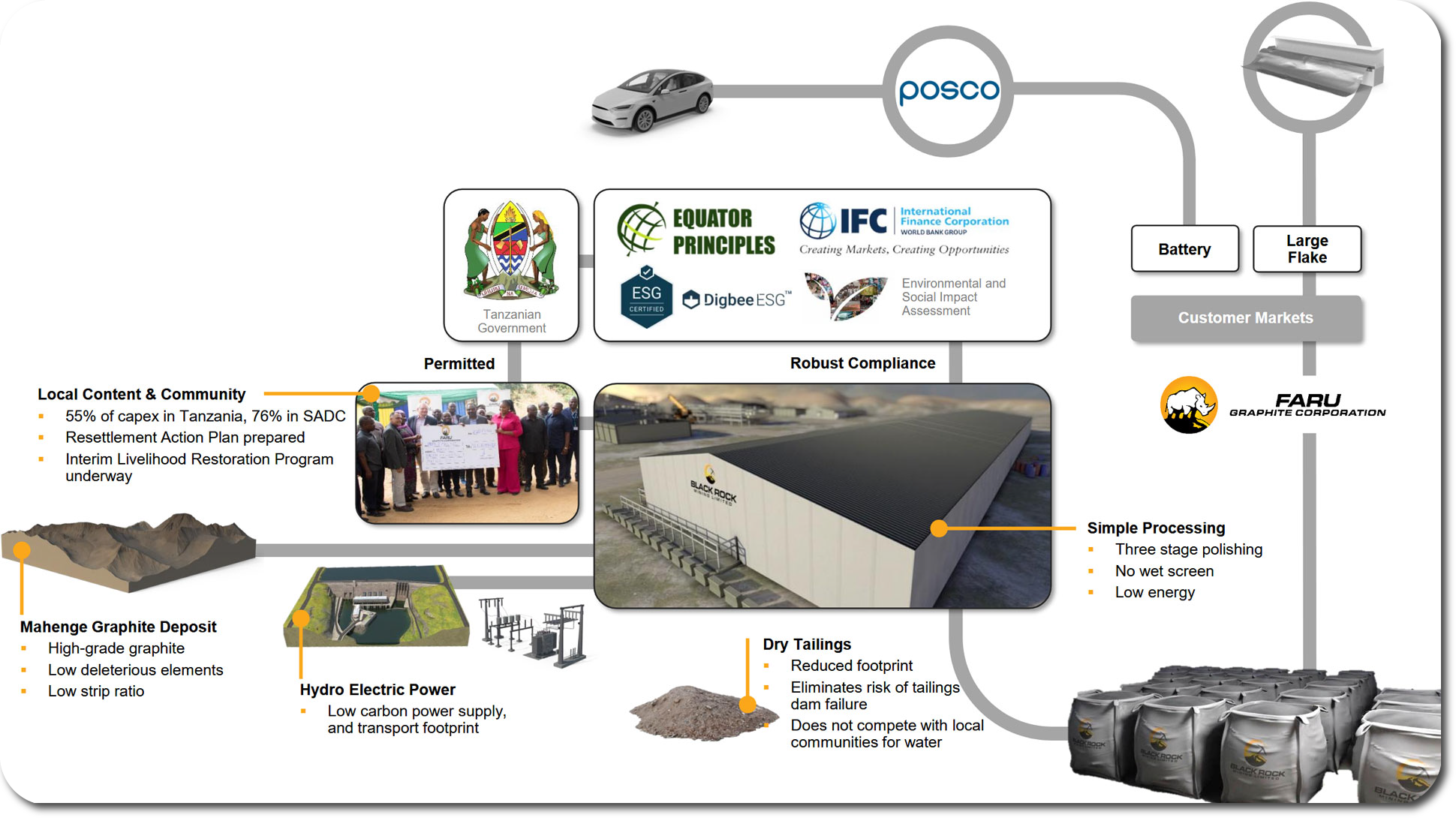
Mahenge Graphite Project is one of very few graphite projects in the world expected to have both 1st quartile costs and very low carbon footprint graphite products due to access to competitively priced hydro-dominated grid power in Tanzania.
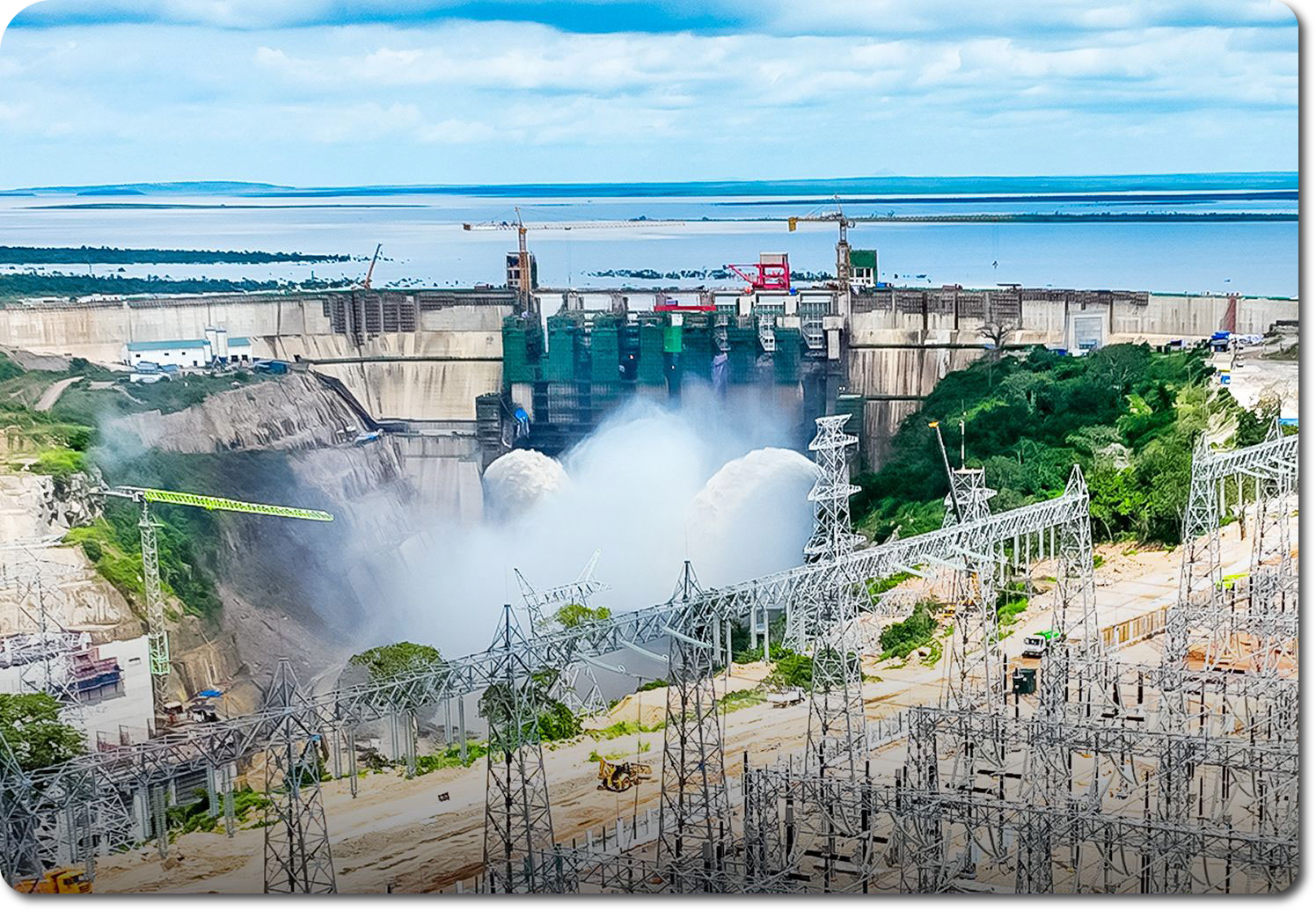
Julius Nyerere Hydropower Project
While there is no premium associated with Mahenge Graphite Project’s low carbon footprint graphite products yet, we are already seeing new reporting requirements being introduced in Europe for the battery supply chain which require a detailed breakdown of the carbon footprint associated with each battery component. In the short term we expect the Project’s low carbon footprint products to provide enhanced market access in Europe and western markets, but longer term we see potential for our product to attract a premium or other fiscal incentives.
Project Milestones
Critical de-risking project milestones for the Mahenge Graphite Project:
- May 2025– Facilities Agreement with DBSA, IDC and CRDB increased by US$25m to US$204m
- May 2025– Faru signs Implementation Agreement and Power Supply Agreement with TANESCO to develop new 220kV power line to Mahenge
- September 2024 – US$179m Facilities Agreement signed with the Development Bank of Southern Africa (DBSA), the Industrial Development Corporation of South Africa (IDC) and the Tanzanian lender, CRDB Bank (CRDB).
- September 2024 – US$40m Equity Investment in Black Rock Mining Limited signed with POSCO in exchange for offtake rights for Module 2 fines.
- June 2024 – Execution of full form offtake agreements for large flake graphite concentrate with two key customers.
- May 2023 – Binding Module 1 Offtake and US$10M Prepayment Agreements with POSCO.
- October 2022 – Black Rock Completes Front End Engineering Design, Reconfirming Mahenge as Tier 1 scale project with compelling projected returns.
- September 2022 – Special Mining Licence Awarded for Mahenge.
- December 2021 – SML awarded with total area of 35km², valid for 26 years.
- December 2021 – Framework agreement signed with the Government of Tanzania, confirming their 16% Free Carried Interest shareholding, agreement to consolidate Mining Licences into a Special Mining Licence (SML), and commitment to jointly developing the Mahenge Graphite Project.
- June 2020 – Strategic Alliance formed with POSCO Group for the development of the Mahenge Graphite Mine.
- July 2019 – Enhanced study (eDFS) demonstrating exceptional financial metrics released.
- October 2018 – Definitive Feasibility Study (DFS) for the Project released.
Timeline to Production
Construction of Module 1 is expected to take 24-months from a final investment decision to completion of commissioning.

